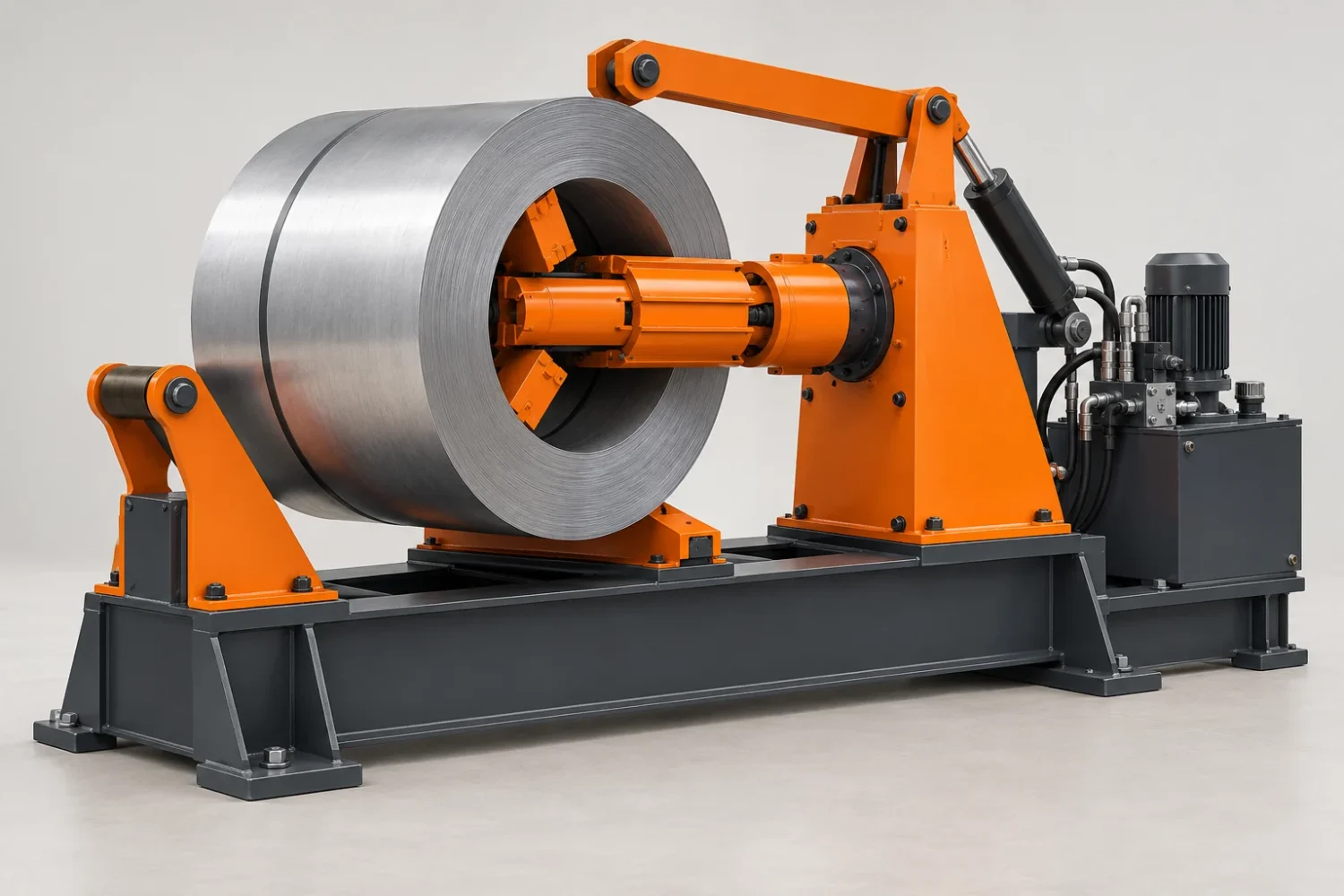
Decoilers are often compared by the weight they can support. Weight is only part of the specification. Coil dimensions, material behaviour and the way the line operates also need to be reviewed before a suitable configuration can be defined.
Do not describe a coil with one number
Provide minimum and maximum inside diameters, outside diameters, widths and weights together. Explain how coils are packed, received and transported from storage to the line. The loading method should fit the production flow from the outset.
The decoiler works with the next machine
Strip direction, line height and unwinding control matter to the connection with a straightener or feeder. How material flow is managed during stops and restarts belongs in the project scope. The control approach should be selected for the material and application.
Review changeovers under real conditions
Document the steps needed to prepare and load a new coil and thread it into the line. Where changes are frequent, compare alternative configurations against this workflow. The suitability of a double-head arrangement cannot be decided from its catalogue name alone.
Show access and safety space
The layout should show the space required for the moving coil, handling equipment and operator access. Safety design and operating procedures require application-specific specialist assessment. Making responsibilities and equipment boundaries clear at quotation stage helps reduce uncertainty later.