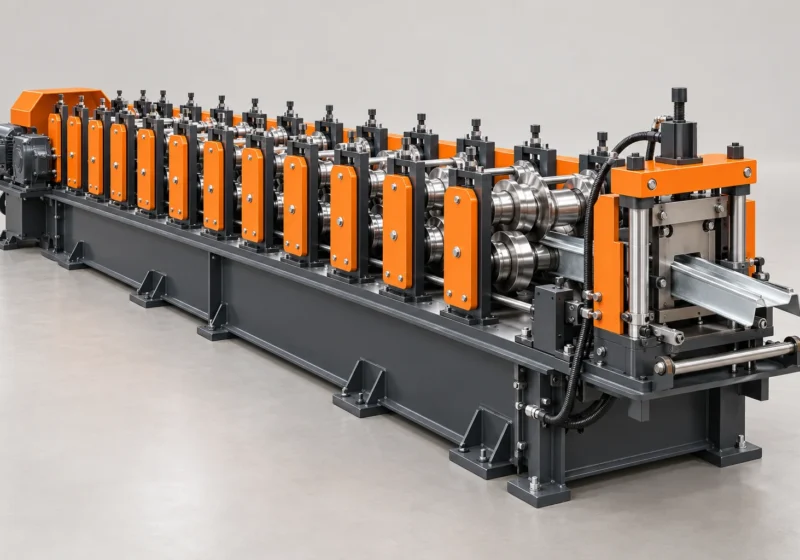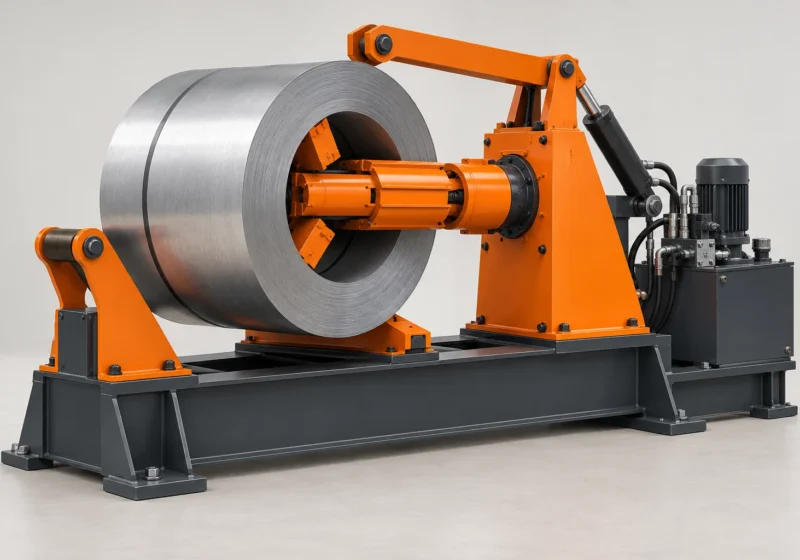
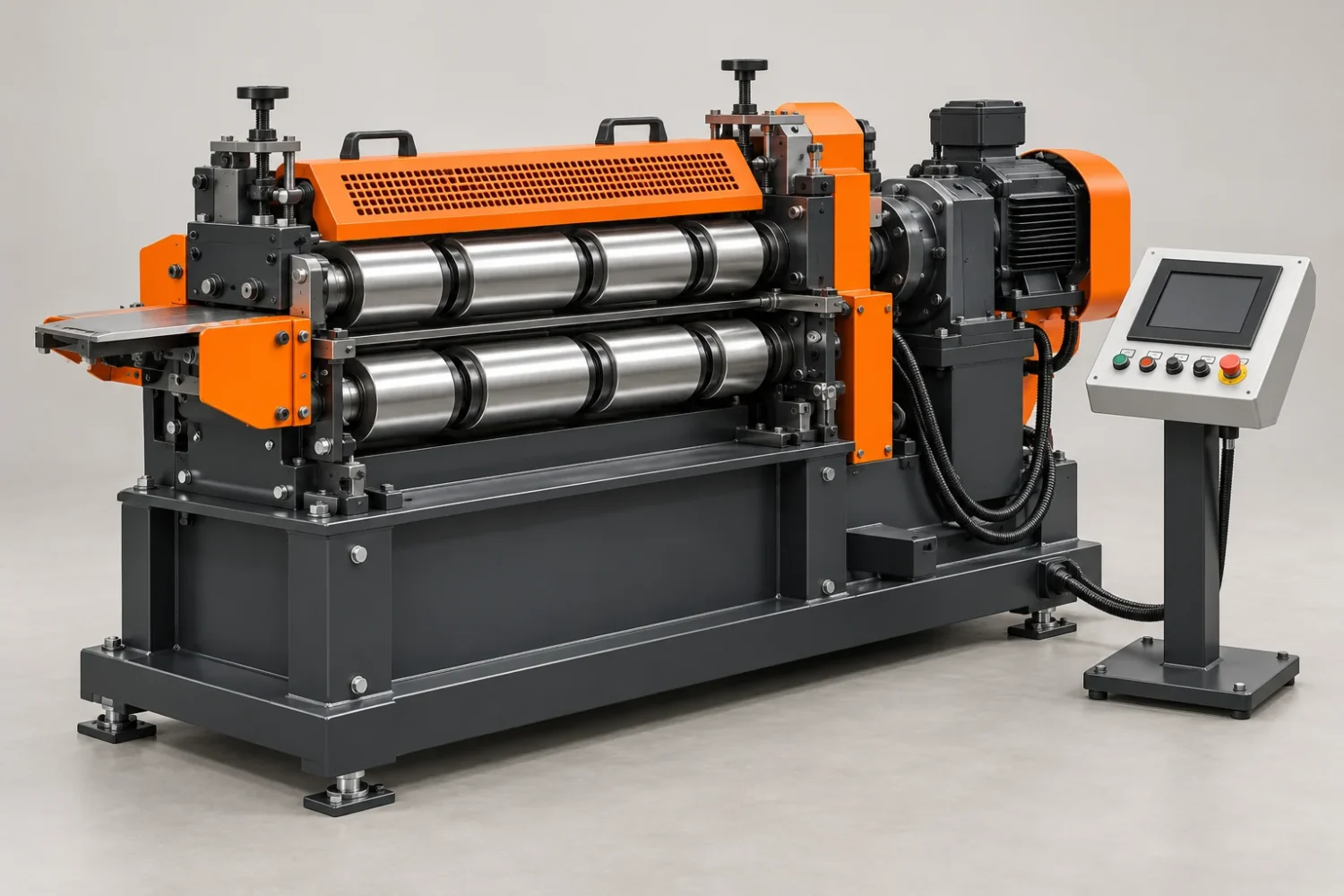
Choosing a press feeding system often begins with a catalogue comparison. Yet nominal speed and strip width alone do not define what a line actually needs. The decoiler, straightener, feeder and press must be considered as a connected process from the start.
Define the material first
A commercial material name is not enough. Bring the grade, mechanical properties, coating, thickness and width ranges into one table. Coil inside diameter, outside diameter and weight also affect loading and decoiler selection. Where several materials are used, provide the full operating range rather than only the most common grade.
Consider feed length alongside the press cycle
Required output, feed length, tool layout and available feeding time are connected. A single maximum catalogue speed does not mean the same output can be achieved for every part. Pilot release, strip release and communication with the press belong in the technical assessment.
Layout is more than machine length
Allow space for coil loading, threading, maintenance and safe operator access. Review the loop area and line direction against the existing factory flow. Include doors, columns and transport routes in the layout drawing.
A short quotation checklist
- Material and coil characteristics
- Part drawing, feed length and output target
- Press and tooling information
- Layout drawing and existing equipment
- Quality criteria and acceptance method
Sharing this information early makes it easier to compare quotations against the same technical scope. Final suitability should be established through an application-specific engineering review.